Reviewboard Magazine
2021 HONDA ACCORD
58
Reviewboard Signal / Review

2021 HONDA ACCORD

Automobiles › Cars
HONDAVehicleNot listedReviewboard opinion: ok

2021 HONDA ACCORD was matched by year, make, and model using official NHTSA vehicle data. 4 matching NHTSA safety recalls were returned for this year/make/model. 217 NHTSA consumer complaints were returned in the current lookup.

Vehicle SignalThis review includes VIN-decoded vehicle data, safety/recall checks, and Reviewboard scoring where available.

Vehicle safety and recall findings

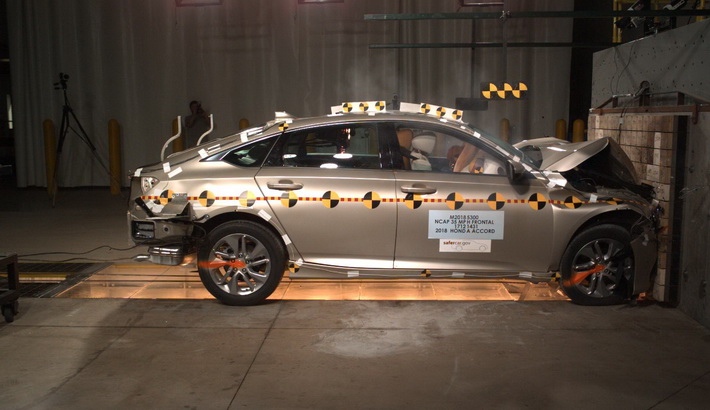
5Overall safety
5Front crash
5Side crash
5Rollover
4 recalls for this model yearRecall finding

Government crash-test scores are separate from Reviewboard's own score and opinion shown above.

Recall 21V900000 — SEAT BELTS:REAR/OTHER:RETRACTOR

What is wrong: Honda (American Honda Motor Co.) is recalling certain 2021 Accord Sedan, Accord Hybrid, CR-V, Ridgeline, 2022 Insight and CR-V Hybrid vehicles. The automatic locking retractor on the second-row center seat belt assembly may deactivate improperly, which can result in an unsecured child restraint system. As such, these vehicles fail to comply with the requirements of Federal Motor Vehicle Safety Standard number 208, "Occupant Crash Protection."

Why it matters: An unsecured child restraint system can increase the risk of injury during a crash.

How it will be fixed: Dealers will replace the second-row center seat belt assembly, free of charge. Owner notification letters were mailed January 14, 2022. Owners may contact Honda customer service at 1-888-234-2138.

Date reported to the U.S. government: 18/11/2021

Recall 24V064000 — AIR BAGS:SENSOR:OCCUPANT CLASSIFICATION:FRONT PASSENGER

What is wrong: Honda (American Honda Motor Co.) is recalling certain 2020-2022 Pilot, Accord, Civic sedan, HR-V, Odyssey, 2020 Civic coupe, Fit, 2021-2022 Civic hatchback, 2021 Civic Type R, Insight, 2020-2021 CR-V, CR-V Hybrid, Passport, Ridgeline, Accord Hybrid, 2020 Acura MDX, 2022 Acura MDX, 2020-2022 Acura RDX, and 2020-2021 Acura TLX vehicles. The front passenger seat weight sensor may crack and short circuit, failing to suppress the air bag as intended.

Why it matters: An air bag that deploys unintentionally during a crash can increase the risk of injury.

How it will be fixed: Dealers will replace the seat weight sensors, free of charge. Owner notification letters were mailed March 28, 2024. This is a phased recall. Owners may contact Honda customer service at 1-888-234-2138. Honda's numbers for these recalls are XHP and VHQ.

Date reported to the U.S. government: 01/02/2024

Recall 23V858000 — FUEL SYSTEM, GASOLINE:DELIVERY:FUEL PUMP

What is wrong: Honda (American Honda Motor Co.) is recalling certain 2013-2023 Honda Accord, Civic Coupe, Civic Sedan, Civic Hatchback, Civic Type R, CR-V, HR-V, Ridgeline, Odyssey, Acura ILX, MDX, MDX Hybrid, RDX, RLX, TLX, 2019-2022 Honda Insight, Passport, 2020 Honda CR-V Hybrid, 2018-2019 Honda Clarity PHEV, Fit, and 2015-2020 Honda Accord Hybrid, Pilot, Acura NSX vehicles. The fuel pump inside the fuel tank may fail.

Why it matters: Fuel pump failure can cause an engine stall while driving, increasing the risk of a crash.

How it will be fixed: Dealers will replace the fuel pump module, free of charge. Owner letters were mailed September 6, 2024. Owners may contact Honda customer service at 1-888-234-2138. Honda's numbers for this recall are KGC and KGD. This recall is an expansion of NHTSA recall numbers 21V-215 and 20V-314.

Date reported to the U.S. government: 18/12/2023

Recall 26V332000 — AIR BAGS:SENSOR:OCCUPANT CLASSIFICATION:FRONT PASSENGER

What is wrong: Honda (American Honda Motor Co.) is recalling certain 2018-2021, 2023 Acura TLX, 2019-2024 RDX, 2017-2020, 2022-2026 MDX, 2017-2021, 2023, 2025 Honda Ridgeline, 2017-2022 Pilot, 2019-2021 Passport, 2018-2026 Odyssey, 2019-2022 Insight, 2019-2021 HR-V, 2018-2020 Fit, 2020-2022 CR-V Hybrid, 2017-2022 CR-V, 2017-2018, 2021 Civic Type R, 2017-2021 Civic hatchback, 2016-2020 Civic coupe, 2016-2022 Civic, 2017-2022 Accord Hybrid, and 2016-2022 Accord vehicles. The front passenger seat weight sensor may crack and short circuit, which can cause the air bags to deploy unintentionally during a crash.

Why it matters: Air bags that deploy unintentionally during a crash increase the risk of injury.

How it will be fixed: Dealers will replace the seat weight sensors, free of charge. Owner notification letters were mailed July 7, 2026. Owners may contact Honda's customer service at 1-888-234-2138. Honda's numbers for this recall are BOL, WO9, OOA, WOM, XOH, NOC, POD, BOE, UOF, POB, EOG, AOI, QO8, TOJ, DO7, and SOK. This recall expands previous NHTSA recall number 24V064. Vehicle Identification Numbers (VINs) involved in this recall will be searchable on NHTSA.gov beginning May 29, 2026.

Date reported to the U.S. government: 21/05/2026

58Reviewboard score
okReviewboard opinion
$23,500.00National average vehicle price
August 9, 2026Signal updated

Buying read

2021 HONDA ACCORD was matched by year, make, and model using official NHTSA vehicle data. 4 matching NHTSA safety recalls were returned for this year/make/model. 217 NHTSA consumer complaints were returned in the current lookup.

Public review layerThis page shows product intelligence only. Customer names, accounts, and individual shopping histories are not displayed.
The full Reviewboard review

Our complete buying opinion

Written for the current Reviewboard score of 58.0/100 · poor · 1192 words

When evaluating the 2021 Honda Accord, it is important for potential buyers to understand that this vehicle has been assigned a Reviewboard rating of 58.0 out of 100, which corresponds to a "poor" opinion. This assessment reflects a complex picture where official safety metrics contrast sharply with owner experiences and reported issues. While the government crash-test ratings are exceptionally high—scoring a perfect 5 across all categories for front collision avoidance, driver, passenger, rollover, and side crash protection—the Reviewboard score focuses on the overall quality, reliability, and ownership experience. This discrepancy highlights that while the vehicle meets minimum federal safety standards, it falls short in areas related to long-term dependability and component performance as perceived by consumers.

The concerns reflected in the lower rating stem directly from owner feedback and reported defects. The Reviewboard analysis identified specific areas of concern across the vehicle, including the forward collision avoidance system, the electrical system, the engine, and the service brakes. These components are critical to both the daily operation and the safety of the car, and when issues arise in these areas, they significantly impact the overall ownership experience.

Owner sentiment regarding the 2021 Honda Accord is generally negative. Public buyer feedback skews toward concerns about reliability and common problems experienced by owners. Data indicates that the vehicle has accumulated a significant number of reported complaints and defects. Specifically, owner reports detail issues related to accessories, the interior, electrical systems, and the engine. This suggests that while the core mechanical structure may be sound, the experience of owning the car is frequently marred by problems with ancillary systems and components.

To put these concerns into context, the vehicle has been associated with a substantial volume of reported issues. There are 217 consumer complaints recorded, along with 14 crash reports, 5 injury reports, and 1 fire report. These numbers underscore that while the vehicle is widely used, there is a documented history of problems that owners have encountered.

When considering the safety context, it is essential to distinguish between government testing and real-world ownership. The official U.S. government crash-test ratings confirm that the 2021 Honda Accord performs exceptionally well in terms of physical crash protection. However, the Reviewboard rating addresses a broader scope—the day-to-day reliability and functional quality that owners experience over time. A buyer must weigh these two perspectives: excellent structural safety versus potential issues with specific systems and components.

Regarding safety recalls, all owners of the 2021 Honda Accord should be aware of several recalls issued by the manufacturer. For instance, there are recalls related to seat belt systems and front passenger seat weight sensors that may affect certain models within the 2018-2026 range. Owners should verify their specific vehicle’s VIN against NHTSA records to ensure they are up-to-date on all applicable notices. Furthermore, a recall concerning the fuel system, which addresses potential failures in the fuel pump, also applies to certain Accord models and other Honda vehicles across various years. Buyers should proactively check for these recalls and any related service bulletins concerning the electrical or engine components mentioned in the Reviewboard analysis.

For prospective buyers, especially those prioritizing reliability and a smooth ownership experience, it is crucial to verify specific details beyond the general safety scores. While the vehicle has strong crash test results, the reported consumer complaints—particularly those focusing on the electrical system, interior accessories, and engine performance—suggest that potential owners should investigate these areas further before making a purchase. Buyers should seek out detailed owner experiences and check for service history related to the components identified as potential concerns by the Reviewboard.

The market average price for this vehicle is estimated around $23,500 USD. When considering the value proposition, buyers must factor in the reported issues and the need for potential repairs or maintenance associated with the electrical and engine systems. The negative owner sentiment suggests that while the Accord offers a benchmark for dependability among mid-size sedans, it comes with known complexities that require careful due diligence.

In conclusion, the 2021 Honda Accord is a vehicle that excels in objective crash safety testing but presents challenges in terms of overall ownership quality and reliability as reflected by consumer feedback. The Reviewboard score of 58.0 out of 100 and the "poor" opinion are consistent with the documented volume of owner complaints concerning electrical systems, engine performance, and accessories. Buyers should consider this vehicle only if they are prepared to thoroughly investigate reported issues, verify all relevant recalls, and accept a degree of uncertainty regarding the long-term experience of owning a vehicle with these specific component concerns.

When you are evaluating this vehicle, it is essential to shift your focus from the flawless government safety ratings to the reality of ownership costs and long-term reliability. The high crash test scores confirm that the physical structure of the 2021 Honda Accord is robust and performs excellently in collision scenarios. However, the Reviewboard’s lower score reflects the practical experience of daily driving, which is where the documented issues with the electrical system, engine performance, and various accessories come into play. These are not just minor annoyances; they represent potential points of future maintenance and unexpected expenses that can erode the value and enjoyment of owning the car over time. Buyers must understand that a vehicle can be safe in a crash but still present significant functional challenges during routine operation.

Practical buying guidance requires you to treat the reported consumer complaints as serious indicators of potential long-term risk. Since the most common problems cited by owners involve complex systems like the electrical components and the engine, prospective buyers should insist on a thorough pre-purchase inspection that specifically targets these areas. Do not rely solely on general reviews; seek out detailed service records and ask mechanics to inspect the electrical wiring harness and engine operation for any signs of previous or current faults related to the identified problem areas. Furthermore, given the extensive list of recalls—covering everything from seat belt mechanisms to fuel pump integrity—it is imperative that you verify every single recall listed on NHTSA’s website against your specific vehicle’s VIN immediately. Ignoring these notices leaves you exposed to potential safety risks and unnecessary repair costs down the line.

The financial context must also be considered alongside the quality concerns. While the market price for this model year is estimated around $23,500 USD, the reported 217 consumer complaints suggest that the total cost of ownership may be higher than anticipated if these component issues require frequent or expensive repairs. Prospective owners should budget for potential maintenance related to the engine and electrical systems, recognizing that these are the areas where owner satisfaction is lowest. If you choose to proceed with this vehicle, assume that you will need to allocate extra funds for diagnostic work and potential repairs related to the components flagged by the Reviewboard analysis before committing to ownership.

Ultimately, while the 2021 Honda Accord offers a foundation of physical safety, the documented issues surrounding its electrical systems, engine, and accessories mean that the overall experience is compromised. Based on the comprehensive assessment of owner sentiment and reported defects, the vehicle is rated at 58.0 out of 100 with a poor opinion.

Public buyer feedback

Public buyer feedback skews negative. Checked 5 public results with 3 positive and 22 negative cues. One public result noted: The 2021 Honda Accord scores 78/100 (Good) with 5 recalls and 215 owner complaints . Full breakdown of issues, safety ratings, and repair costs.

Similar reviews you may find useful