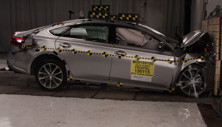
2018 TOYOTA AVALON
2018 TOYOTA AVALON was matched by year, make, and model using official NHTSA vehicle data. 2 matching NHTSA safety recalls were returned for this year/make/model. 24 NHTSA consumer complaints were returned in the current lookup.

2018 TOYOTA AVALON was matched by year, make, and model using official NHTSA vehicle data. 2 matching NHTSA safety recalls were returned for this year/make/model. 24 NHTSA consumer complaints were returned in the current lookup.
Government crash-test scores are separate from Reviewboard's own score and opinion shown above.
What is wrong: Toyota Motor Engineering & Manufacturing (Toyota) is recalling certain 2011-2019 Corolla, 2011-2013 Matrix, 2012-2018 Avalon, and 2013-2018 Avalon Hybrid vehicles. During certain crashes, the air bag electronic control unit (ECU) may malfunction, possibly disabling the deployment of the air bags and/or seat belt pretensioners.
Why it matters: In the event of a crash, air bags and/or seat belt pretensioners that do not deploy as intended may increase the risk of injury.
How it will be fixed: Toyota will notify owners, and dealers will inspect the ECU and install a noise filter between the air bag control module and its wire harness, as necessary, free of charge. Owners were notified of the safety risk beginning March 2, 2020. A second letter notifying owners of the remedy repair will be mailed between March 16, 2020 and June 27, 2020. Owners may contact Toyota customer service at 1-888-270-9371. Toyota's numbers for this recall are 20TB03, 20TA03 and 20TA05.
Date reported to the U.S. government: 17/01/2020
What is wrong: Toyota Motor Engineering & Manufacturing (Toyota) recalled certain 2018-2019 4Runner, Highlander, Camry, Land Cruiser, Sequoia, Sienna, Tacoma and Tundra, and Lexus RC 300, RC 350, GS 350, GX 460, IS 300, LC 500, LS 500, LX 570, RX 350L, and 2019 Toyota Avalon and Corolla, and certain Lexus NX 300, and ES 350 vehicles on January 13, 2020. On March 4, 2020, Toyota expanded the recall to include certain 2014-2015 Toyota 4Runner and Land Cruiser, 2018 Avalon, Corolla, 2014 FJ Cruiser, 2017 Sienna and Lexus 2018 ES 350, 2018-2019 GS 300, 2013-2014 GS350, 2014-2015 GX 460, IS 350 and LX 570, 2014 IS F, 2018-2019 IS 350, LC 500H and LS 500H, 2013-2015 LS 460, 2015 NX 200T and RC350, 2017 RC 200T and RX 350. Toyota also removed the 2018-2019 Toyota 4Runner and Land Cruiser and 2018-2019 Lexus GX 460 and LX 570 and 2019 NX300 from inclusion in this recall. On March 19, 2020, Toyota expanded the recall to include 2015 Lexus GS350 vehicles. The low-pressure fuel pump inside the fuel tank may fail.
Why it matters: If the fuel pump fails, the engine can stall while driving, increasing the risk of a crash.
How it will be fixed: Toyota will notify owners, and dealers will replace the fuel pump, free of charge. The recall began May 4, 2020. Owners may contact Toyota customer service at 1-888-270-9371 or Lexus customer service at 1-800-255-3987. Toyota's numbers for this recall are 20TB02 and 20TA02 for Toyota vehicles and 20LB01 and 20LA01 for Lexus vehicles.
Date reported to the U.S. government: 13/01/2020
2018 TOYOTA AVALON was matched by year, make, and model using official NHTSA vehicle data. 2 matching NHTSA safety recalls were returned for this year/make/model. 24 NHTSA consumer complaints were returned in the current lookup.
The 2018 Toyota Avalon is a vehicle that manages to balance comfort and dependability, earning an authoritative Reviewboard rating of 79.6 out of 100, which places it in the "good" category. This assessment reflects a careful look at the vehicle’s overall performance, reliability history, and owner feedback. While this score indicates a solid product, understanding what that means requires looking beyond the number to examine the specific strengths and concerns associated with owning this full-size sedan.
When considering the 2018 Toyota Avalon, buyers are looking for a comfortable, low-stress driving experience, and this vehicle generally delivers on that promise. It is designed as a full-size sedan, prioritizing passenger comfort and smooth cruising, making it an appealing choice for those who value a refined ride. The market average price for this model year typically sits around $17,500.00 USD, positioning it within the competitive segment of large sedans.
The strengths of the 2018 Avalon lie primarily in its proven powertrain and excellent build quality. Owner feedback often highlights that the vehicle offers a reliable foundation, suggesting that with proper maintenance, owners can expect years of trouble-free driving. This positive sentiment stems from the reputation Toyota has built for manufacturing durable vehicles, which contributes significantly to the overall reliability score. For many shoppers seeking a dependable full-size sedan, the Avalon represents a smart long-term investment in comfort and sustained performance.
However, like any vehicle, the 2018 Toyota Avalon comes with specific concerns that prospective buyers must verify before making a purchase. The public feedback gathered from owners indicates that while the core experience is generally positive, there are reported issues that affect certain components. Specifically, owner reports have noted problems related to accessories and electrical systems within the vehicle. These complaints suggest that while the mechanical foundation may be sound, some aspects of the interior or electronic systems may require attention down the line.
A deeper examination of the reported issues reveals a total of 24 consumer complaints filed against the model, including 7 crash reports and 4 injury reports. The components most frequently cited in these complaints involve air bags, steering, the fuel/propulsion system, and forward collision avoidance systems. This focus on safety-critical and mechanical components underscores the importance of addressing potential risks associated with the vehicle.
It is crucial to distinguish between the Reviewboard’s assessment and objective safety data. The U.S. government crash-test ratings for the 2018 Toyota Avalon show a strong safety profile, with an overall rating of 5 out of 5 across various categories, including front crash, side crash, and rollover risk. This objective rating suggests that the vehicle performs well in terms of physical safety during testing. However, the Reviewboard score of 79.6 is a holistic measure that incorporates owner experience, reliability history, and the reported issues detailed by the community, providing a more nuanced view than raw government test scores alone.
The specific concerns raised by owners are tied to two important safety recalls issued by Toyota. The first recall, campaign number 20V024000, addresses the air bags and restraint control module. This recall alerts owners that in certain crashes, there is a potential risk that air bags or seat belt pretensioners may not deploy as intended, which could increase the risk of injury. The second recall, campaign number 20V012000, concerns the fuel system, specifically the fuel pump. This recall notes that if the fuel pump fails, the engine can stall while driving, thereby increasing the risk of a crash. Both recalls are relevant to the 2018 Avalon and highlight areas where owners should ensure they are aware of potential mechanical risks.
When evaluating this vehicle, prospective buyers must verify more than just the overall score. They need to look beyond the positive sentiment regarding comfort and build quality and investigate the reported issues. Buyers should seek out detailed information regarding the specific accessories and electrical problems mentioned by owners, as these often relate to maintenance costs and potential inconvenience. Furthermore, understanding the context of the two safety recalls is essential; while the vehicle passed government crash tests, awareness of these recalls ensures that necessary repairs are addressed to maintain full safety compliance and peace of mind.
Who should consider the 2018 Toyota Avalon? This vehicle is best suited for buyers who prioritize a comfortable, dependable ride and appreciate the reputation of Toyota’s engineering. It appeals to those seeking a spacious, low-stress sedan where reliability is paramount. However, potential owners must be prepared to engage with the reported owner feedback regarding accessories and electrical systems, understanding that these are common areas where some owners have experienced issues.
What should a buyer verify? Before purchasing, shoppers should thoroughly investigate the specific details of the 2018 model’s history. This includes reviewing the two safety recalls—the air bag system and the fuel pump—to ensure all necessary remedies have been completed. Furthermore, buyers should look into the reported problems concerning accessories and electrical systems to gauge potential long-term maintenance costs and ownership experience.
In conclusion, the 2018 Toyota Avalon holds a solid position with its Reviewboard rating of 79.6 and an opinion of "good." This score is consistent with the vehicle’s proven powertrain and excellent build quality, which contribute to a comfortable and reliable driving experience. While the vehicle excels in core reliability, potential owners must acknowledge the reported owner complaints regarding accessories and electrical systems, and ensure they are fully aware of the two safety recalls related to the air bag system and the fuel system before making a final decision. The Avalon remains a sound choice for a dependable full-size sedan, provided the buyer is prepared to address these specific details.
Public buyer feedback skews negative. Checked 5 public results with 4 positive and 23 negative cues. One public result noted: The 2018 Toyota Avalon scores 77/100 (Good) with 2 recalls and 24 owner complaints . Full breakdown of issues, safety ratings, and repair costs.