Reviewboard Magazine
2020 TOYOTA CAMRY
61
Reviewboard Signal / Review

2020 TOYOTA CAMRY

Automobiles › Cars
TOYOTAVehicleNot listedReviewboard opinion: ok

2020 TOYOTA CAMRY was matched by year, make, and model using official NHTSA vehicle data. 3 matching NHTSA safety recalls were returned for this year/make/model. 267 NHTSA consumer complaints were returned in the current lookup.

Vehicle SignalThis review includes VIN-decoded vehicle data, safety/recall checks, and Reviewboard scoring where available.

Vehicle safety and recall findings

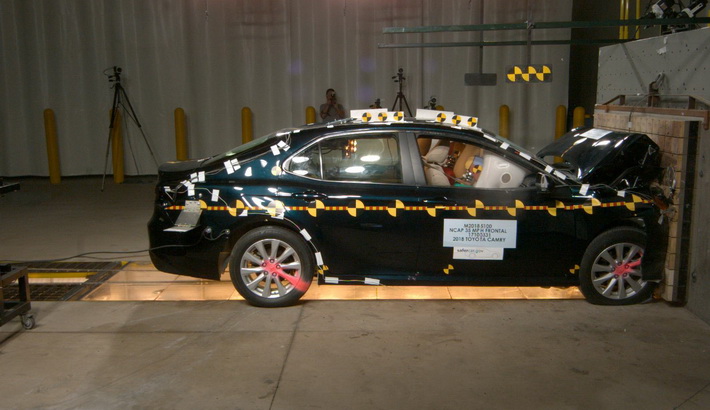
5Overall safety
5Front crash
5Side crash
5Rollover
3 recalls for this model yearRecall finding

Government crash-test scores are separate from Reviewboard's own score and opinion shown above.

Recall 20V682000 — FUEL SYSTEM, GASOLINE:DELIVERY:FUEL PUMP

What is wrong: Toyota Motor Engineering & Manufacturing (Toyota) is recalling certain 2018-2019 4Runner, 2019-2020 Avalon, 2019 Corolla Hatchback, 2017-2019 Highlander, 2018-2020 Camry, 2020 Corolla, 2018-2019 Land Cruiser, 2017-2020 Tacoma, 2019-2020 RAV4, 2019-2020 Sequoia, 2017-2020 Sienna, 2019-2020 Tundra, 2018-2020 Lexus ES350, 2017 Lexus GS200t, 2017-2019 Lexus GS350, 2019 Lexus GS300, 2018-2020 Lexus LC500h, 2019-2020 Lexus LS500, 2018-2019 Lexus GX460, 2017 Lexus IS200t, 2019 Lexus IS300, 2019 Lexus IS350, 2018-2020 Lexus LC500, 2018 Lexus LS500, 2019 Lexus LS500h, 2018-2019 Lexus LX570, 2017 Lexus RC200t, 2019 Lexus RC300, RC350, 2017 and 2019-2020 Lexus RX350, 2018-2020 RX350L, 2019 Lexus UX200, 2018-2019 Lexus NX300 vehicles. The low-pressure fuel pump inside the fuel tank may fail.

Why it matters: If the fuel pump fails, the engine can stall while driving, increasing the risk of a crash.

How it will be fixed: Toyota will notify owners, and dealers will replace the fuel pump assembly with an improved one, free of charge. Owners of specific models were notified that remedy parts were available starting January 21, 2021. Owners of other models will be notified as remedy parts become available. Remedy parts should be available for all affected vehicles by late March 2021. Owners may contact Toyota customer service at 1-888-270-9371 or Lexus customer service at 1-800-255-3987. Note: This recall is an expansion of recall 20V-012. Toyota's number for this recall is 20TA02. Lexus' number for this recall is 20LA01.

Date reported to the U.S. government: 04/11/2020

Recall 20V064000 — ENGINE AND ENGINE COOLING

What is wrong: Toyota Motor Engineering & Manufacturing (Toyota) is recalling certain 2020 Toyota Avalon Hybrid, Camry, Camry Hybrid and Lexus ES300h and 2019-2020 RAV4 and RAV4 Hybrid vehicles equipped with 2.5L 4-Cylinder engines. Porosity in the engine castings may result in cracks than can allow coolant to leak internally and/or externally.

Why it matters: A coolant leak can cause the engine to overheat and cause a vehicle stall in conventional gasoline vehicles, increasing the risk of a crash. Additionally, for all involved vehicles, the engine may get damaged mechanically, possibly resulting in an engine oil leak, increasing the risk of a fire.

How it will be fixed: Toyota will notify owners, and dealers will inspect and replace the engine including the engine block, as necessary, free of charge. The recall began April 3, 2020. Owners may contact Toyota customer service at 1-888-270-9371 or Lexus at 1-800-255-3987. Toyota's number for this recall is 20TA04. Lexus' number for this recall is 20LA02.

Date reported to the U.S. government: 06/02/2020

Recall 23V865000 — AIR BAGS:SENSOR:OCCUPANT CLASSIFICATION

What is wrong: Toyota Motor Engineering & Manufacturing (Toyota) is recalling certain 2020-2021 Avalon, Avalon Hybrid, Corolla, Highlander, Highlander Hybrid, RAV4, RAV4 Hybrid, Lexus ES350, Lexus RX350, Lexus RX450H, 2021 Sienna Hybrid, Lexus ES250, 2020-2022 Camry, Camry Hybrid, and ES300H vehicles. A short circuit may develop in the Occupant Classification System (OCS) sensor, preventing the front passenger air bag from deploying.

Why it matters: An air bag that does not deploy during a crash increases the risk of injury.

How it will be fixed: Dealers will inspect and replace the sensor as necessary, free of charge. Interim letters notifying owners of the safety risk were mailed in February 2024. Some final remedy owner letters were mailed October 31, 2024. Letters will continue to be mailed in phases through January 2026. Owners may contact Toyota customer service at 1-800-331-4331. Toyota's number for this recall is 23TB15/23TA15 Lexus 23LB03/23LA03.

Date reported to the U.S. government: 20/12/2023

61Reviewboard score
okReviewboard opinion
$19,500.00National average vehicle price
August 9, 2026Signal updated

Buying read

2020 TOYOTA CAMRY was matched by year, make, and model using official NHTSA vehicle data. 3 matching NHTSA safety recalls were returned for this year/make/model. 267 NHTSA consumer complaints were returned in the current lookup.

Public review layerThis page shows product intelligence only. Customer names, accounts, and individual shopping histories are not displayed.
The full Reviewboard review

Our complete buying opinion

Written for the current Reviewboard score of 61.0/100 · ok · 943 words

The 2020 Toyota Camry is a mainstream sedan designed for reliable, everyday transportation, offering a balance of comfort and practicality that appeals to a wide range of buyers. When evaluating this vehicle through the lens of consumer experience and editorial assessment, the Reviewboard assigns it an overall score of 61.0 out of 100, which corresponds to an opinion of "ok." This rating places the Camry firmly in the middle ground, suggesting that while the vehicle is fundamentally acceptable and functional, there are notable areas where potential buyers should exercise caution before making a purchase.

This assessment is based on a comprehensive look at public buyer feedback, owner experiences, and safety data. While the overall score suggests an "ok" performance level, it is essential to understand what this rating truly signifies in the context of owning a vehicle. It means that the Camry meets baseline expectations but is not without specific challenges that owners frequently encounter.

The strengths of the 2020 Toyota Camry lie primarily in its established reputation for durability and safety. The vehicle has been engineered with reliability as a core focus, which is reflected in its high overall safety ratings. According to U.S. government crash-test ratings, the Camry achieved a perfect score across all categories: front crash, front driver, front passenger, rollover, and side crash ratings were all rated 5 out of 5. This indicates that from a structural safety perspective, the vehicle performs exceptionally well in collision scenarios.

However, when moving beyond government safety metrics to consider the day-to-day ownership experience, a deeper look at owner feedback reveals areas where the experience is mixed. Public buyer feedback tends toward the negative side, with numerous reports highlighting common problems and defects experienced by owners. In total, vehicle owners have reported 267 consumer complaints, including 14 crash reports, 12 injury reports, and 2 fire reports. These statistics point to specific mechanical and system issues that owners frequently deal with.

The areas where owner sentiment is most negative often revolve around the core systems of the car. The most commonly reported problems involve the electrical system, engine performance, and various components within the fuel and propulsion system. This suggests that while the vehicle may be structurally sound, maintenance or specific component failures can present significant challenges for owners. Furthermore, feedback frequently points to issues with the air conditioning and heating systems, alongside general engine problems. These recurring complaints indicate that potential buyers should anticipate that ownership may involve addressing these mechanical concerns.

It is important to distinguish between the overall Reviewboard score and the specific components driving that assessment. The Reviewboard analysis identified three official issues related to safety recalls: problems with the fuel system, engine and engine cooling, and occupant classification air bags. These recalls are critical points for any prospective buyer to verify. For instance, there is a recall concerning the fuel pump assembly, which addresses a potential risk if the fuel pump fails while driving, increasing the risk of a crash. There is also a recall related to the engine and engine cooling system, which addresses porosity in engine castings that could allow coolant leaks, potentially leading to engine damage or fire risk. Finally, there is a recall concerning the occupant classification sensor, which relates to the air bag system's ability to deploy correctly during a crash.

These recalls, while managed by the manufacturer, underscore the need for careful due diligence. Prospective owners should verify that their specific vehicle has been addressed regarding these safety concerns and understand the scope of any necessary repairs or replacements. The fact that these issues involve critical systems like the fuel system and engine cooling means that thorough inspection and maintenance are paramount to ensuring both safety and longevity.

When considering the price and value of the 2020 Toyota Camry, the market average price is estimated around $19,500 USD. This price point positions the Camry as a competitive choice in the mid-size sedan segment. However, when factoring in the known potential for mechanical issues—specifically those related to electrical systems, engine performance, and fuel delivery—buyers must weigh this cost against the potential long-term repair costs associated with these common complaints. The value proposition is therefore tied directly to the buyer's willingness and ability to manage potential maintenance and repair needs that arise from reported owner experiences.

Who should consider the 2020 Toyota Camry? This vehicle is best suited for buyers who prioritize a proven, mainstream platform and are comfortable engaging with the reality of ownership, including routine maintenance and addressing known component-related issues. It appeals to those seeking dependable transportation where the primary focus is on functional reliability rather than absolute perfection or zero reported defects.

What should a buyer verify before purchasing? Prospective owners must look beyond the general market price and public perception. They should investigate specific repair histories for any desired trim level, paying close attention to reports concerning electrical systems, engine performance, and fuel delivery components. Furthermore, verifying that all relevant safety recalls—specifically those related to the fuel system, engine cooling, and air bag sensors—have been properly addressed is non-negotiable.

In conclusion, the 2020 Toyota Camry holds an "ok" standing based on its current Reviewboard assessment of 61.0. This score reflects a vehicle that offers solid safety performance but carries a history of common mechanical complaints reported by owners concerning electrical systems, engine operation, and fuel delivery. While the vehicle is fundamentally sound and safe according to government crash tests, potential buyers must approach the purchase with an understanding that ownership involves managing known issues. If a buyer is prepared to address these specific concerns through diligent inspection and maintenance, the Camry remains a viable and practical option for everyday driving.

Public buyer feedback

Public buyer feedback skews negative. Checked 5 public results with 2 positive and 20 negative cues. One public result noted: The 2020 Toyota Camry scores 75/100 (Good) with 5 recalls and 253 owner complaints . Full breakdown of issues, safety ratings, and repair costs.

Similar reviews you may find useful