
Interesting Things
The Invisible Universe: Exploring Dark Matter and Space Debris
A deep dive into the mysterious realm of dark matter and the tangible consequences of human activity in space, exploring how these grand cosmic puzzles reflect our own need for understanding and stewardship.
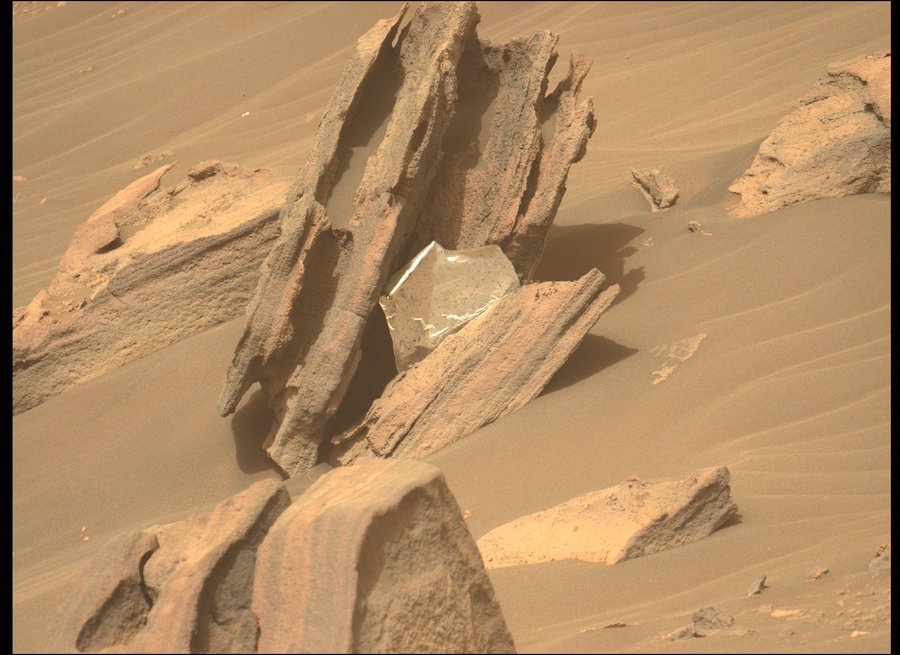
The Cosmic Enigma: Hunting the Invisible
For decades, physicists have wrestled with an enigma that shapes our view of reality: dark matter. It’s the ghost in the machine, the substance that makes up roughly 85% of all the matter in the universe, yet it remains stubbornly invisible to our eyes and instruments. Imagine standing in a vast, dark room, knowing that the majority of the stuff there is unseen—that's the reality we are trying to map. Dark matter doesn't interact with light like normal matter; instead, it exerts a gravitational pull, subtly warping the fabric of space itself. It’s this invisible scaffolding that dictates how galaxies spin and how cosmic structures form.
The quest to find dark matter is not just an academic exercise; it’s a fundamental push against our current understanding of the cosmos. Scientists are searching for its gravitational fingerprints across the universe, hoping to finally fill in the massive gaps in the cosmic picture we currently possess. The recent excitement stems from new experimental results, such as those from the Lux-Zeplin (LZ) Dark Matter Experiment, which suggests they may be getting closer to detecting this elusive substance.
This pursuit connects directly to the very nature of discovery. It reminds us that the most profound truths often lie just beyond the edge of what we can currently perceive. When you look at the universe, you see stars and galaxies—the visible matter. But dark matter is the unseen architecture holding it all together. Discovering it would be like finding the missing pieces of a colossal, cosmic puzzle, fundamentally rewriting the textbooks on physics and cosmology. It’s a reminder that the most exciting frontiers are often those we cannot yet see.
The Echoes of Space Debris
While the search for dark matter deals with the grand scale of the universe, our immediate environment in space is also facing a crisis. The reality of space debris—the junk left behind by rockets and satellites—is a stark, tangible reminder of human action and its consequences. We are currently seeing physical evidence of this carelessness: space junk has punched a new hole in the Moon, leaving a visible scar that serves as a potent metaphor for our stewardship of the cosmos.
This debris issue forces us to confront a difficult question about ownership and responsibility. As one observer noted, the space industry often treats the sky as a place to dump what it no longer wants, operating under the assumption that there is no consequence. This mindset—that we can extract value without bearing the cost—is deeply troubling when applied to celestial bodies like the Moon. It highlights a profound imbalance between technological capability and ethical responsibility.
The physical impact of this debris underscores the need for a new framework for space operations. The challenge isn't just about cleaning up; it’s about establishing a model of accountability. We must move beyond mere extraction and embrace true stewardship, recognizing that what we leave behind is permanent. This echoes the broader human tendency to prioritize immediate gain over long-term responsibility, whether on Earth or in orbit. It demands a shift from 'ownership' to genuine 'stewardship' when dealing with the frontier of space.
The Interconnectedness of Discovery
Whether we are peering into the deep vacuum of space to find dark matter or examining the microscopic world within our bodies, the underlying theme is one of interconnectedness. The pursuit of knowledge—whether it’s understanding gravitational anomalies or mapping cellular structures—demands a holistic view. This principle extends beyond science into how we process information and live our lives. When we look at complex systems, whether they are physical laws or human behavior, we must seek the whole picture.
This interconnectedness is vital when navigating modern challenges. Whether it's understanding the complex mechanisms of climate change, analyzing the social dynamics behind public discourse, or even examining the biological intersections that shape our sense of wonder, a holistic approach is essential. It means recognizing that the physical world, the biological world, and the human experience are all deeply interwoven. This perspective encourages humility in our pursuit of answers.
The wonder inherent in these discoveries—from the potential revelation of dark matter to the intricate dance of life on Earth—should inspire us to approach every challenge with curiosity and a sense of awe. It’s about recognizing the immense complexity, acknowledging the limits of our current knowledge, and committing to evidence-led debate, rather than falling into simplistic narratives. The true reward is not just the data itself, but the expanded capacity for wonder it unlocks in every reader.
A New Way to See the World
The journey into these deep scientific realms—whether exploring the unseen gravitational forces of dark matter or delving into the microscopic world of disease—offers a powerful lens through which to view our place in existence. It encourages us to look beyond the surface and appreciate the intricate, often surprising, mechanisms at play. This is where true understanding blossoms: by embracing complexity rather than seeking simple answers. The pursuit itself fosters a deeper sense of human curiosity and the necessity of careful, humble inquiry.
When we consider the vastness of space or the complexity of biological systems, it becomes clear that our capacity to understand is limited, but our drive to know is limitless. This tension between what we can measure and what we can imagine fuels innovation. It pushes us to develop new tools—like advanced telescopes or high-resolution microscopes—not just to collect data, but to fundamentally change how we perceive reality. This is the engine of progress, driven by a desire to understand the 'why' behind everything.
Ultimately, these scientific explorations remind us that there is always more to discover. The discoveries about dark matter or the intricate workings of biology are not endpoints; they are invitations to deeper exploration. They invite us to engage with the world with renewed wonder, understanding that the universe is filled with mysteries waiting for our careful, curious attention. This shared journey into the unknown is what makes science so compelling and why it matters deeply to every person.
The Human Element in Science
The process of scientific discovery is as much a human endeavor as it is a mathematical one. The excitement surrounding dark matter or the intricate details revealed by new microscopy is fueled by the ingenuity and persistence of the human mind. It involves not just the instruments, but the relentless curiosity of the scientists who ask the big questions and meticulously sift through the data to find the answers. This highlights the crucial role of human intuition, tempered by rigorous observation.
Furthermore, the way we discuss these findings—the tension between scientific consensus and public perception—is as important as the science itself. When dealing with complex topics like the origins of an event or the nature of consciousness, there is a vital need for humility in public discourse. We must resist the urge to simplify profound mysteries into easy answers, recognizing that the reality is often layered and nuanced. This requires fostering an environment where evidence-led debate can thrive, free from the noise of speculation.
The story of these discoveries—from ancient human migration patterns to the latest astrophysics—is a testament to humanity’s enduring capacity for wonder. It reminds us that by combining rigorous science with genuine curiosity and empathy, we can uncover truths that expand our horizons, connecting us more deeply to the vastness of the universe and to each other on this shared planet. The journey into the unknown is, in itself, one of the most human endeavors there is, and it remains endlessly fascinating.
‘One of the biggest discoveries in science’: have scientists found dark matter? – podcast
Are we any closer to detecting dark matter?
Want our sources?
Enter your email and we’ll send the claim-linked sources used for this article.
We use this address only to send this source list.