
Interesting Things
Mice with Human Brain Cells: A Biological Breakthrough
A groundbreaking biological research breakthrough allows scientists to engineer mice with human brain cells, opening unprecedented avenues for studying complex neurological disorders and redefining our understanding of consciousness. This development forces a vital conversation about the ethics of manipulating life and the immense potential for medical advancement.
The Mind Reimagined: When Biology Meets the Machine
Imagine a world where understanding the deepest mysteries of the human mind isn't just about reading old texts; it’s about building new bridges across biology and technology. That is the astonishing reality unfolding in neuroscience right now. Scientists have managed to create something truly paradigm-shifting: mice with brains that incorporate functioning human cells. This isn't science fiction; it’s a tangible, albeit complex, step into understanding the very architecture of consciousness.
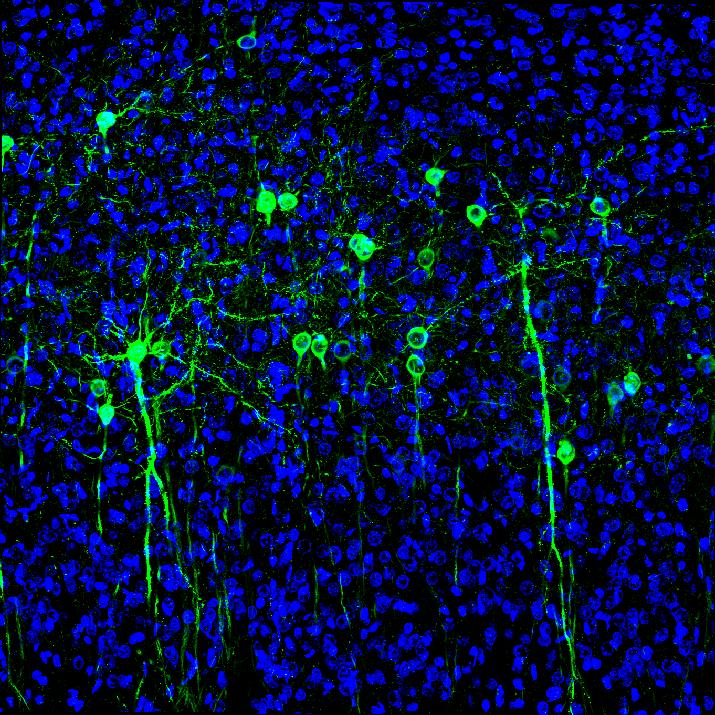
The core of this breakthrough lies in an incredibly intricate process. Researchers genetically engineered mice to reshape their structure, aiming to create models that could better illuminate the complexities of human brain disorders—conditions where current treatments often fall short. They didn't just look at the surface; they dove into the messy, interconnected circuits that govern thought and feeling. Think of it like trying to map an entire, sprawling city by only looking at a few street signs; the challenge is immense, but the reward is profound.
The method involves creating 'organoids'—collections of living cells that mimic brain tissue—and carefully integrating human cells into these engineered mouse brains. This allows researchers to observe how human biological processes interact with an animal framework, opening up entirely new avenues for investigation. It’s a delicate dance between engineering and biology, forcing us to confront what it truly means to define human thought and experience in the laboratory setting.
This work isn't just an academic exercise; it carries immense weight for those grappling with neurological conditions. For conditions like autism or epilepsy, where understanding the underlying biological mechanisms is desperately lacking, this new model offers a potential pathway. It suggests that by observing how human biology interacts within a different framework, we might uncover secrets about brain disorders that remain stubbornly hidden to us. It forces us to ask: what are the fundamental building blocks of human experience, and how can we use that knowledge to heal?
The Ethical Tightrope: Wonder and Responsibility
When you peer into this kind of biological innovation, wonder is inevitable, but it must be tempered by profound responsibility. The ability to manipulate the very essence of cognition in living systems raises monumental ethical questions. As one observer noted, even with the most rigorous guidelines, there remains a deep philosophical quandary: how do we account for the experience of these experimental subjects? This isn't just about laboratory protocols; it’s about our moral obligations to all living things.
The science itself is impressive—the ability to observe and map neural networks in novel ways is breathtaking. Yet, this power demands a careful recalibration of our ethical compass. The scientists themselves acknowledge the complexity, noting that while the technical achievement is remarkable, the implications for animal welfare and the definition of consciousness are vast. It forces us to pause and consider the very nature of what we are capable of knowing and doing when we push the boundaries of biological understanding.
This intersection between cutting-edge research and ethics mirrors broader societal debates. Whether it's in medicine, technology, or public discourse, there is a constant negotiation between scientific ambition and human values. The development of these brain models compels us to engage in a vital conversation about where we draw the lines—where does scientific curiosity end, and ethical consideration begin? It demands humility from the researchers and critical engagement from the public.
Ultimately, this research serves as a powerful reminder that our pursuit of knowledge must be guided by empathy. The potential for transformative treatments is real, but realizing that potential responsibly requires more than just technical skill; it requires a deep commitment to understanding the human element in every scientific endeavor. It’s a call to ensure that as we unlock new biological frontiers, we do so with wisdom and a profound sense of care for all life involved.
Why This Matters Now: A New Lens on Human Potential
Why should you care about engineered mouse brains? Because this research is not confined to a lab; it speaks directly to the core of what it means to be human and what we can achieve. It forces us to re-examine our relationship with biology, pushing us beyond conventional boundaries into realms of possibility that redefine what we consider possible for health and understanding ourselves. This isn't abstract theory; it’s a tangible exploration of the very mechanisms that shape our minds.
For readers navigating the complexities of modern life—whether dealing with personal health challenges, engaging in public discourse, or simply seeking a deeper sense of meaning—this work offers a powerful analogy for tackling complex problems. It demonstrates that by looking at systems from multiple angles—biological, technological, and ethical—we can uncover solutions that were previously invisible. It encourages a holistic approach to understanding the world around us, suggesting that interconnectedness is the key to unlocking profound insights.
The mechanism itself—the integration of human and animal neural structures—is a metaphor for our own journey. It speaks to the inherent interconnectedness of all life, suggesting that the boundaries we perceive between species are perhaps more fluid than we often admit. This perspective can foster a greater sense of empathy, reminding us that the biological systems we study are deeply intertwined with the social and emotional landscapes we inhabit daily. It’s about recognizing the shared, intricate tapestry of existence.
In essence, this breakthrough reminds us that true progress lies not just in accumulating data, but in asking better questions—questions that demand humility, foresight, and a commitment to ethical stewardship. It pushes us toward a future where scientific advancement is inextricably linked with a deeper sense of humanistic concern, ensuring that our pursuit of knowledge serves the greater good of all living beings. The wonder here lies in the potential to use this understanding not just for science, but for a more compassionate way of living.
The Future of Understanding: Beyond the Lab Bench
Looking ahead, the implications of successfully modeling human brain functions in these novel systems are staggering. If this approach proves viable for understanding complex disorders, it opens doors to developing treatments that target the root causes of neurological conditions with unprecedented precision. The journey from laboratory observation to clinical application will be long and fraught with ethical navigation, but the potential reward—a better quality of life for those suffering—is a powerful motivator.
The real shift, however, may be in how we frame these discussions. As technology continues to advance, the dialogue surrounding artificial intelligence, genetic engineering, and consciousness will intensify. This research serves as a vital anchor, reminding us that technological power must always be tethered to humanistic goals. The focus must remain on using this incredible capacity for discovery to foster empathy, promote understanding, and build a future where innovation serves genuine human flourishing.
The journey from the initial experimental setup to potential therapeutic application is a testament to the relentless human drive to understand. It underscores the necessity of maintaining a balance: harnessing the power of scientific inquiry while remaining deeply attuned to the ethical responsibilities that accompany such powerful knowledge. The future of science, and indeed our humanity, depends on how thoughtfully we navigate these uncharted territories together. The wonder isn't just in what we can discover, but in how wisely we choose to use what we find.
A Reflection on Progress
This development is more than a scientific footnote; it’s a profound reflection of our collective capacity for innovation. It shows that when curiosity is channeled with rigorous methodology and ethical consideration, the possibilities stretch far beyond our immediate expectations. It reminds us that the most significant leaps forward often occur at the intersection of seemingly disparate fields—biology, engineering, and philosophy. The ability to synthesize these areas into a coherent vision is what truly defines human ingenuity.
The story of this research is one of pushing against limitations. It’s about accepting the messy reality of complex systems and finding ways to map them, not just to control them. It invites us to adopt a mindset of continuous inquiry, where uncertainty is not a roadblock but an invitation to deeper exploration. This momentum—this relentless drive to understand the intricate dance of life—is what keeps the flame of human curiosity burning bright, pushing us toward a future defined by greater knowledge and deeper compassion.
Here we have a new model that allows us to actually capture aspects of human brain function in a way that has not been possible before.
The hope is that this will provide a new way to investigate the biology of some human brain disorders.
Want our sources?
Enter your email and we’ll send the claim-linked sources used for this article.
We use this address only to send this source list.