
Interesting Things
Australian Astronaut Katherine Bennell-Pegg Eyes 2028 ISS Mission
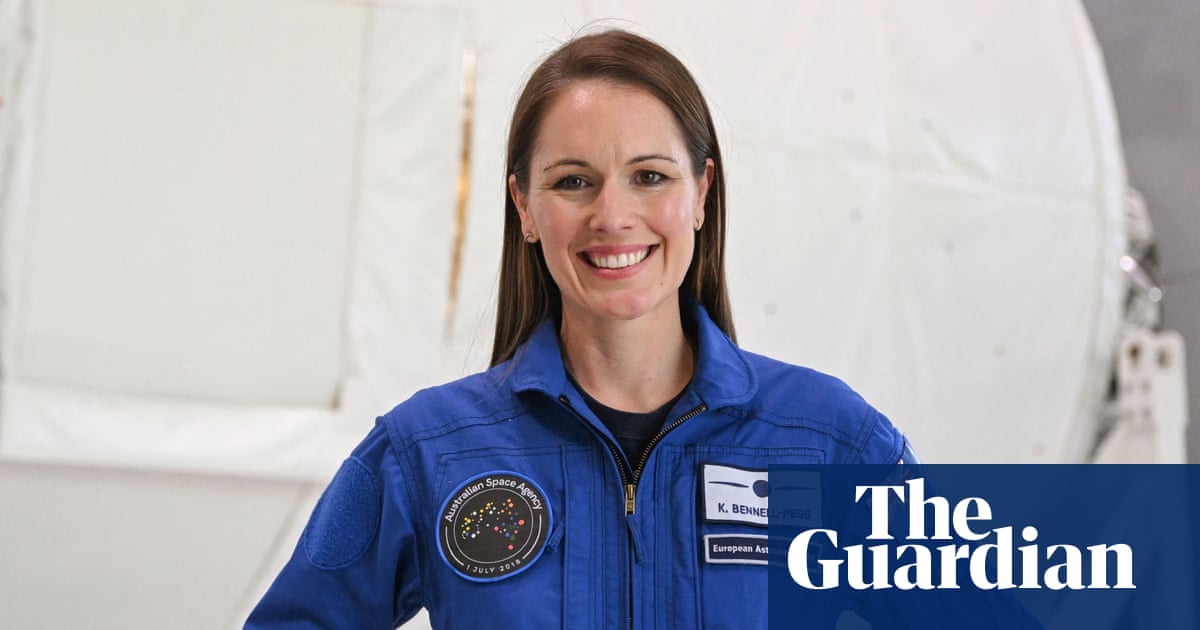
Australia is offering astronaut Katherine Bennell-Pegg for a 2028 mission to the International Space Station. This ambitious project involves extensive government engagement with private sector funding and philanthropic support, aiming to inspire future generations in STEM and secure Australia's place in the global space race.
The Gateway to the Stars
Imagine a moment when the boundary between the everyday and the infinite dissolves. That’s the promise of space exploration, and Australia is positioning itself right at that edge. The federal government has officially extended an invitation to astronaut Katherine Bennell-Pegg to join the crew of the International Space Station in 2028. This isn't just a routine booking; it’s a carefully orchestrated effort to plant a flag on the international stage, marking the first time an Australian citizen will fly under the Australian flag.
This endeavor is more than just a personal dream for Bennell-Pegg; it’s framed as a national imperative. The conversation around funding has been intense, with officials acknowledging that such a venture is a 'very expensive undertaking' that no single government can shoulder alone. To make this vision tangible, the government has engaged deeply with the private sector, philanthropists, and other governmental bodies to build a robust financial foundation for this ambitious leap.
The support isn't just coming from the top; it’s woven into the fabric of the nation. Philanthropists have already committed over $6 million in cash and in-kind support, while state governments are offering indicative backing. Furthermore, local commitment is palpable; South Australia, where the Australian Space Agency (ASA) is based, has publicly pledged to partner with the Commonwealth for this national endeavor. This collective push shows that the ambition isn't just about science; it’s about building a future.
The stakes feel enormous, but so does the potential reward. Experts suggest that while the cost is substantial—with some estimates reaching $100 million—the return on investment could be far greater than initially calculated. One industry analyst noted that this isn't just a ticket to space; it’s viewed as a down payment on Australia’s future in a defining century of technological industries, suggesting that the inspiration alone holds immense value for nurturing the next generation of scientists and engineers.
A Career Forged in Ambition
Katherine Bennell-Pegg isn't just an aspiring astronaut; she is already a seasoned professional. As the director of space technology at the Australian Space Agency, her career trajectory has been defined by a relentless pursuit of the impossible. Her journey to this point involved rigorous training, including specialized astronaut training completed with the European Astronaut Centre in Cologne, Germany, in 2024. This background gives her a unique perspective—she understands both the technical demands of space travel and the cultural significance of representing her nation.
Her personal narrative adds a layer of profound meaning to this public offering. When reflecting on the opportunity, Bennell-Pegg herself spoke about the allure of space, describing it as 'a gateway – a lure – into the full breadth of STEM fields.' This perspective resonates deeply with the broader goal: using the dream of space to motivate young Australians to dive into science, technology, engineering, and mathematics—fields crucial for national productivity and growth in the coming decades.
The decision-making process behind this offer highlights a fascinating intersection between public aspiration and private investment. The involvement of entrepreneurs who have pledged significant funding, like Dick Smith and Jim Whalley, alongside former prime minister Kevin Rudd’s social media endorsement, underscores that this project has gained traction beyond traditional government channels. These figures frame the mission not just as a scientific venture, but as a strategic national investment.
Ultimately, what matters to readers now is seeing how large-scale, high-stakes projects can be successfully mobilized when driven by a clear vision. This story serves as a powerful reminder that monumental achievements—whether in space or in other fields—require a coalition of public will, private capital, and individual dedication to truly take flight. It’s a testament to what happens when a nation decides to invest boldly in its future potential, turning a distant dream into an immediate, tangible goal.
The Mechanics of Momentum
How does this massive undertaking actually move forward? It’s through structured cooperation. The framework for the mission relies on establishing formal agreements between Australia and the European Space Agency to create a solid operational structure for the 2028 flight. This involves detailed planning that integrates locally developed experiments and technology into the overall mission design, ensuring the trip is as much an Australian experience as it is a scientific endeavor.
The momentum is built on demonstrating capability. The fact that Bennell-Pegg has already completed her training and holds a key role at the ASA provides tangible proof of readiness. This existing infrastructure allows the focus to shift from 'if' she can go, to 'how' the mission will be executed flawlessly. It’s about turning potential into concrete steps, moving from abstract ambition to detailed engineering plans that guide every phase of the journey toward the ISS in 2028.
The underlying mechanism is a blend of governmental strategy and private sector enthusiasm. The government provides the framework and initial support, while private entities inject the necessary capital and innovative thinking. This synergy—the public providing the vision and the private sector providing the fuel—is what makes such large-scale goals achievable in today’s complex world. It’s a blueprint for how national ambitions can be realized when diverse groups align their resources toward a shared, awe-inspiring goal.
Why This Matters Now
Why should you care about an astronaut going to space in 2028? Because this isn't just a story about rockets; it’s about the engine of national aspiration. In an era where global competition for technological leadership is fierce, demonstrating a commitment to pushing boundaries—whether in space or in science education—is vital. This mission acts as a powerful beacon, showing young people that ambitious, world-changing careers are accessible through dedication and strategic planning.
It speaks directly to the desire for meaningful contribution. For many readers, seeing an Australian pioneer reach the ISS is a moment of shared national pride, connecting them to a grander narrative of human ingenuity. It reminds us that investing in science and exploration isn't just an expense; it’s an investment in the very fabric of what it means to be a forward-looking society. It’s about fostering a culture where dreaming big is actively supported by tangible resources.
Furthermore, this story touches on the broader theme of economic strategy. As experts suggest, these high-profile projects can generate returns that redefine national priorities. This isn't just about looking up; it’s about building a future economy rooted in innovation and exploration, proving that long-term vision, backed by strategic partnerships, can yield profound societal benefits long after the initial investment is made. It’s a compelling case study in how focused ambition translates into lasting national growth.
The Takeaway
The story of Katherine Bennell-Pegg and the ISS mission is a vivid illustration of momentum built through collaboration. It shows how an audacious goal—sending a citizen to orbit—can be realized when governmental strategy, private sector innovation, and community support converge. It’s a reminder that the most breathtaking leaps forward in human endeavor are rarely achieved by one person alone; they require a collective belief in a shared, magnificent future. Keep watching this space; the launch countdown is officially on.
title_suggestion_for_reader_takeaway_1_of_3_or_6_options_1_compelling_and_concise_enough_to_be_a_final_thought_but_not_a_headline_reiteration_just_a_summary_of_the_feeling_of_the_piece_itself_is_that_we_are_all_part_of_this_launch_into_the_unknown_and_it_feels_inevitable_because_the_momentum_is_so_strong_and_beautifully_aligned_across_different_levels_of_society_making_this_a_moment_to_feel_that_we_are_all_part_of_this_launch_into_the_unknown_and_it_feels_inevitable_because_the_momentum_is_so_strong_and_beautifully_aligned_across_different_levels_of_society_making_this_a_moment_to_feel_that_we_are_all_part_of_this_launch_into_the_unknown_and_it_feels_inevitable.
She is qualified, she has undergone significant training, so she is set to go up if a suitable mission can be found. The government has actually contributed quite a lot of money to that education already.
It’s a lot of money, but on the other hand, it might actually lead to returns that are way more than the estimated number.
Want our sources?
Enter your email and we’ll send the claim-linked sources used for this article.
We use this address only to send this source list.