
Interesting Things
Startup's Night Light Demo Sparks Fierce Environmental Backlash
A US startup's demonstration of lighting Earth from space has sparked a fiery debate between technological ambition and ecological caution, as environmentalists warn that altering the natural rhythm of day and night could have devastating, irreversible consequences for life on Earth.
The Cosmic Illumination Experiment
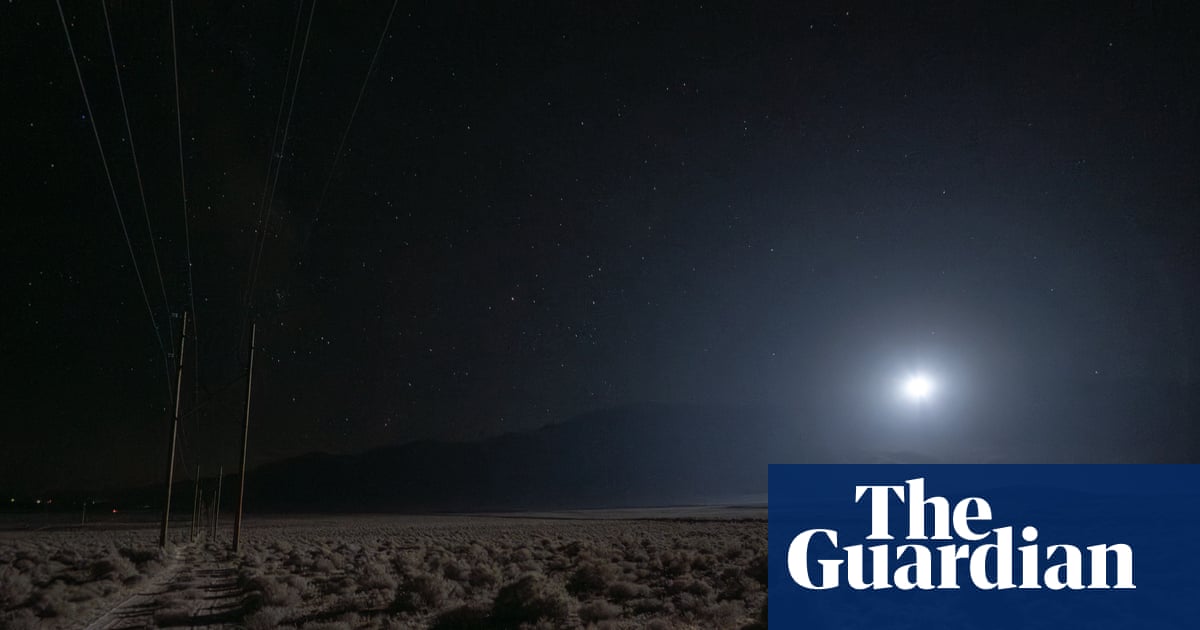
Imagine standing in a quiet California desert at night, expecting the familiar velvet darkness. Instead, you are met with a dazzling, almost unbelievable spectacle: brilliant light pouring down from the sky, seemingly originating from space. This isn't science fiction; it’s the latest demonstration by a US startup called Reflect Orbital, aiming to fundamentally change how we experience the night. The company is attempting something audacious: erecting thousands of giant mirrors in orbit to catch sunlight and reflect it back down onto Earth during the darkest hours.
The initial test was startling for local residents near Lone Pine in the Sierra Nevada region. Locals were reportedly "startled" by the dazzling light, with some describing it as "blinding." Reflect Orbital framed this demonstration not just as a technical feat but as a vital tool for humanity. Their vision extends far beyond mere spectacle; they envision a future where this technology can serve critical functions, such as illuminating areas for search-and-rescue teams after dark, or even bathing crops in sunlight to boost energy output for solar panels and reduce reliance on fossil fuels.
The Environmental and Astronomical Backlash
While the potential benefits—reducing fossil fuel dependence and aiding emergency response—are compelling, the ambition of Reflect Orbital has stirred significant alarm among environmentalists and astronomers. Critics argue that fundamentally altering the rhythm of day and night poses profound risks to life on Earth. They see this project as an "idiotic project" because it involves unresolved questions about the massive potential impacts of manipulating the natural cycle of light.
The concerns raised by these groups center on ecological disruption. Animals, from insects to mammals, rely intrinsically on the reliable transition between day and night for feeding, shelter, and mating. Any alteration to this rhythm could prove disastrous for countless species. Furthermore, astronomers have voiced worries that this nocturnal glare will exacerbate existing light pollution and fuel an even greater rush toward launching more satellites—like those planned by SpaceX—which could obscure the stars and increase space debris raining down on our planet.
The Physics Behind the Magic
The technology hinges on sophisticated optical engineering, drawing inspiration from ancient ingenuity. Scientists are rediscovering how to manipulate light in ways that seem almost magical. A prime example is the ancient Roman Lycurgus Cup, a masterpiece of glass that shifts color—from jade green under normal light to ruby red when lit from behind. Modern scientists have replicated this effect by embedding gold and silver nanoparticles within molten glass.
This process relies on the physics of light interacting with matter at an atomic level. As light passes through these microscopic particles, they selectively block certain wavelengths—in this case, blocking blue and green light while allowing reds and oranges to pass through. This precise control over light allows for the creation of specific colors, demonstrating that even ancient craftsmen possessed a deep, intuitive understanding of how light affects electrons in atoms.
The Race for Space Control
Beyond terrestrial illumination, the broader context of space activity reveals an escalating tension between commercial interests and governmental oversight. Elon Musk’s SpaceX has recently gained access to sensitive tracking data from the US military, including highly precise information on objects in orbit. This move has fueled fears within the industry that a company like SpaceX is positioning itself as the de facto controller of space traffic coordination within the United States.
This dynamic raises serious questions about governance. Industry observers suggest this arrangement creates a "vendor lock," where the government becomes overly reliant on technologically advanced private entities for essential functions. The debate rages over whether this trend—where commercial entities gain unprecedented access to critical space data—is leading toward a privatization of orbital traffic control, potentially sidelining established governmental frameworks designed to ensure safety and transparency for all operators.
Looking Beyond Earth: The Deep Dive into Space Exploration
While the immediate focus is on terrestrial light manipulation, the broader landscape of space exploration continues to push the boundaries of what is possible. Scientists are simultaneously engaged in ambitious missions aimed at understanding the very origins of our solar system. For instance, Japan’s MMX mission is set to launch a spacecraft toward Mars' moon Phobos, aiming to retrieve samples that could finally solve the mystery of how Mars' moons formed—whether through an ancient impact or the capture of wandering asteroids.
This pursuit of deep space knowledge contrasts sharply with the immediate concerns about near-Earth operations. While scientists are focused on gathering tiny grains of dust from Phobos to analyze their chemistry, the public is also grappling with larger, more immediate questions about our environment and our place in the cosmos. The sheer scale of these endeavors—from manipulating light beams thousands of miles away to analyzing minuscule samples from Mars' moons—underscores a human drive to explore, even as we confront the complex ethical implications of that exploration.
‘This is an idiotic project,’ said Jan Hasselman, a senior attorney with Earthjustice. ‘There are a huge number of unresolved questions and significant potential impacts. Literally all of life on Earth evolved based on the rhythm of day and night and there is a ton of data showing that messing with this is not a good idea.’
Reflect Orbital spokesperson stated: ‘We’ll keep working closely with local communities and authorities wherever we operate, and are excited to show how this technology can help save lives.’
Want our sources?
Enter your email and we’ll send the claim-linked sources used for this article.
We use this address only to send this source list.